Dr. Babasaheb Ambedkar Writings and Speeches Vol. 11
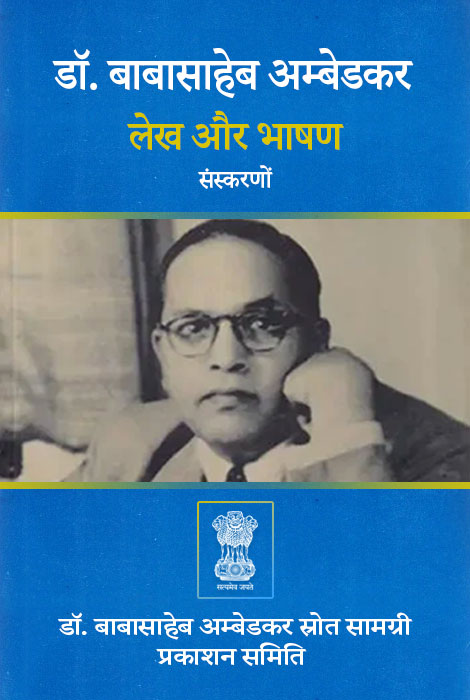
Dr. Babasaheb Ambedkar Writings and Speeches Vol. 11
₹ 00.00/- FREE
Dr. Babasaheb Ambedkar Source Material Publication Committee
Description
Overview of the Volume
The eleventh volume of “Dr. Babasaheb Ambedkar: Writings and Speeches” is a significant compilation that includes Dr. Ambedkar’s treatise titled “The Buddha and His Dhamma.” This work was originally published in 1957 and is structured into eight parts, each focusing on different aspects of the life and teachings of Gautama Buddha. The volume aims to provide a comprehensive understanding of Buddhism from Dr. Ambedkar’s perspective, emphasizing its relevance to social justice and equality.
Book I: Siddharth Gautama – How a Bodhisatta Became the Buddha
In this section, Dr. Ambedkar narrates the early life of Siddharth Gautama, who would become known as the Buddha. Born into a royal family around 563 B.C., he experienced a privileged upbringing but ultimately felt compelled to leave his home in search of answers to human suffering. This book details his journey through various philosophical schools and ascetic practices, culminating in his enlightenment under the Bodhi tree, where he formulated his own understanding of Dhamma.
Book II: Campaign of Conversion
This part discusses the Buddha’s mission to spread his teachings, which included two forms of conversion: one for those who wished to join the monastic order (Bhikkus) and another for lay followers (Upasakas). Dr. Ambedkar highlights how these conversions were inclusive, attracting individuals from diverse backgrounds, thereby promoting social equality.
Book III: What the Buddha Taught
Here, Dr. Ambedkar clarifies key concepts within Buddhism, such as Dhamma (the teachings), Adhamma (what is not Dhamma), and Saddhamma (the true Dhamma). He emphasizes that the Buddha did not claim divine authority for himself or his teachings; rather, he sought to provide practical guidance for alleviating suffering without promises of salvation or divine intervention.
Significance of the Work
Dr. Ambedkar’s writings in this volume are particularly important because they reflect his belief in Buddhism as a vehicle for social reform. He viewed Buddhism not merely as a religion but as a philosophy that could challenge social hierarchies and promote equality among all individuals, especially marginalized communities like Dalits.
Through this volume, Dr. Ambedkar positions Buddhism as an alternative path that aligns with democratic values and human rights principles—an essential aspect given his role as a principal architect of the Indian Constitution and advocate for social justice.
In summary, Dr. Babasaheb Ambedkar Writings and Speeches Vol. 11 serves both as an academic resource on Buddhist philosophy and as a manifesto for social change through spiritual awakening.
Reviews
There are no reviews yet.
Be The First To Review “The Innovator
Related Books

Dr. Bhimrao Ramji Ambedkar, popularly known as Babasaheb Ambedkar, was a jurist, social reformer and politician ...
BE Initiative