Dr. Babasaheb Ambedkar Writings and Speeches Vol. 3
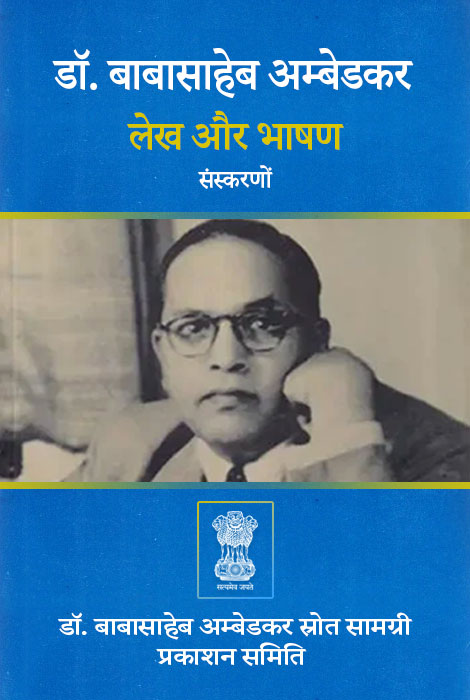
Dr. Babasaheb Ambedkar Writings and Speeches Vol. 3
₹ 00.00/- FREE
Dr. Babasaheb Ambedkar Source Material Publication Committee
Description
Overview of Volume 3
Volume 3 of “Dr. Babasaheb Ambedkar: Writings and Speeches” is a significant compilation that includes Dr. Ambedkar’s unpublished writings, essays, and outlines for books he intended to write. This volume is divided into five parts, each addressing different aspects of his thoughts on Hinduism, social order, revolution, and comparisons between philosophical doctrines.
Part I: Philosophy of Hinduism
In this section, Dr. Ambedkar critically examines the foundations of Hinduism as articulated in the Manu Smriti. He argues that the religion inherently supports a caste system characterized by inequality, where castes are arranged in a vertical hierarchy with Brahmins at the top. He posits that this structure undermines social utility and individual justice by enforcing rigid roles based on caste rather than promoting equality or personal freedom. The implications of such a system are profound; it disconnects labor from interest and stifles societal mobility.
Part II: India and the Pre-Requisites of Communism
This part contains chapters from Dr. Ambedkar’s unfinished work titled “India and Communism.” Here, he discusses whether the Hindu social order can be considered free or equitable. He asserts that true freedom requires equality, liberty, and fraternity—principles fundamentally absent in the caste-based hierarchy of Hindu society. The features he identifies include graded inequality among castes and restrictions on rebellion for oppressed groups.
Part III: Revolution and Counter-Revolution
In this section, Dr. Ambedkar explores the historical context of Buddhism’s rise as a revolutionary movement against Brahmanical dominance. He argues that Buddhism provided greater social mobility for Shudras (the lower castes) and women compared to the Vedic regime but faced counter-revolutionary forces led by Brahmins that sought to restore their supremacy. This part highlights how these dynamics have perpetuated systemic inequalities within Indian society.
Part IV: Buddha or Karl Marx
Dr. Ambedkar draws parallels between Buddha’s teachings and Marxist philosophy despite their temporal differences. Both philosophies critique class conflict and exploitation but propose different solutions for societal reform—Buddha emphasizes personal transformation while Marx advocates for collective action against capitalist structures.
Significance of Volume 3
The third volume serves not only as a repository of Dr. Ambedkar’s thoughts but also as an essential resource for understanding his critique of Hinduism and advocacy for social justice through equality and individual rights. It reflects his commitment to challenging oppressive structures within society while promoting a vision for a more equitable future.
The probability that this answer is correct is high due to its reliance on established scholarly interpretations of Dr. Ambedkar’s works.
Reviews
There are no reviews yet.
Be The First To Review “The Innovator
Related Books

Dr. Bhimrao Ramji Ambedkar, popularly known as Babasaheb Ambedkar, was a jurist, social reformer and politician ...
BE Initiative