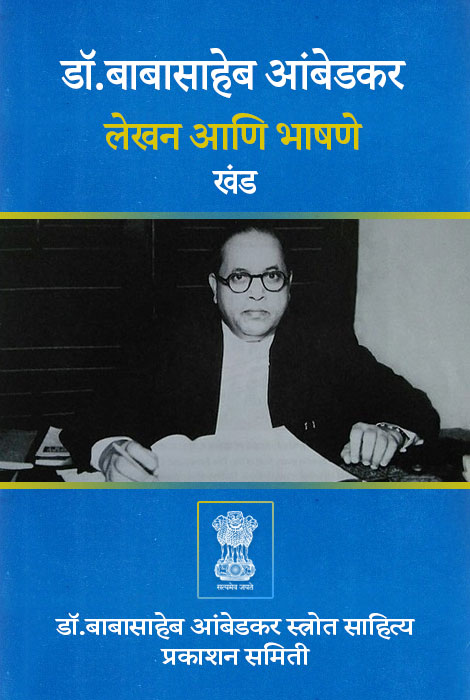
Dr. Babasaheb Ambedkar Writings and Speeches Vol. 6
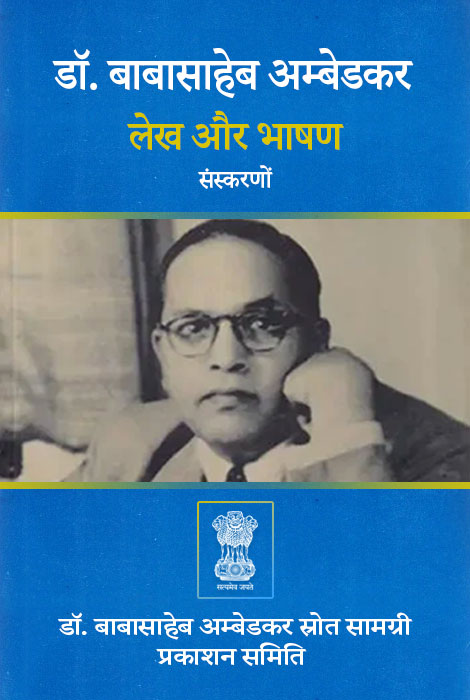
Dr. Babasaheb Ambedkar Writings and Speeches Vol. 6
₹ 00.00/- FREE
Dr. Babasaheb Ambedkar Source Material Publication Committee
Description
Overview of Volume 6
Dr. Bhimrao Ambedkar, known as Babasaheb Ambedkar, was a prominent Indian scholar, social reformer, and the principal architect of the Indian Constitution. His writings encompass a wide range of topics, including economics, social justice, and political theory. Volume 6 of his collected works focuses on economic issues and public finance during British rule in India.
Book I: Administration and Finance of the East India Company
In this section, Dr. Ambedkar critically examines the financial administration of the East India Company, which operated both as a commercial entity and a political authority in India. He highlights the significant economic exploitation that occurred during this period, noting that while India contributed immensely to Britain’s wealth, England’s contributions to India were negligible. He cites historical data indicating that between 1792 and 1857, there was a reported surplus of thirty-two million pounds from Indian administration that primarily benefited British shareholders.
Dr. Ambedkar points out that despite this surplus, it was insufficient to cover dividends for shareholders; thus, the Company resorted to raising loans in both England and India to manage its debts. He emphasizes that these debts were largely incurred due to military expenditures aimed at consolidating British power in India. The Government of India Act of 1858 is highlighted as a pivotal moment when the burden of this debt—amounting to over £69 million—was transferred entirely onto the impoverished Indian populace without their consent or representation.
Book II: The Evolution of Provincial Finance in British India
This book delves into the complexities surrounding provincial finance under British rule. Dr. Ambedkar discusses how financial categories evolved over time and how they often confused those studying Indian finance due to inconsistent terminology across different periods. He outlines the historical context leading up to changes in provincial finance structures and critiques how these systems remained fundamentally imperial rather than federal.
The discussion includes an analysis of various stages in the development of provincial finance—such as assigned revenues and shared revenues—and how these mechanisms were intended to create budgetary equilibrium but often failed to do so effectively.
Book III: The Problem of the Rupee
While specific details about Book III are not provided in your text, it can be inferred from Dr. Ambedkar’s broader work that he likely addresses issues related to currency stability, monetary policy, and their implications for India’s economy during colonial rule.
Conclusion
Volume 6 serves as an essential resource for understanding Dr. Ambedkar’s perspectives on economic governance under colonialism and his advocacy for financial reforms aimed at empowering marginalized communities in India. His analytical approach combines historical data with critical insights into systemic inequalities perpetuated by colonial policies.
Reviews
There are no reviews yet.
Be The First To Review “The Innovator
Related Books


Dr. Bhimrao Ramji Ambedkar, popularly known as Babasaheb Ambedkar, was a jurist, social reformer and politician ...
BE Initiative